Sunday

Flash Fiction Contest: Win this drawing of Edgar

This contest is now closed. 

The winner for this one is Edgar by Mark Brosamer. 

I gotta say, the quality of all the stories were excellent and I really have a hard time choosing between them.  For instance, just the ending line of Dee Turbon's and Kermit Hayes' stories made me pause.  I really appreciate all the effort you have made in writing these. 

Write a flash fiction story about "Edgar" and win this drawing of him.


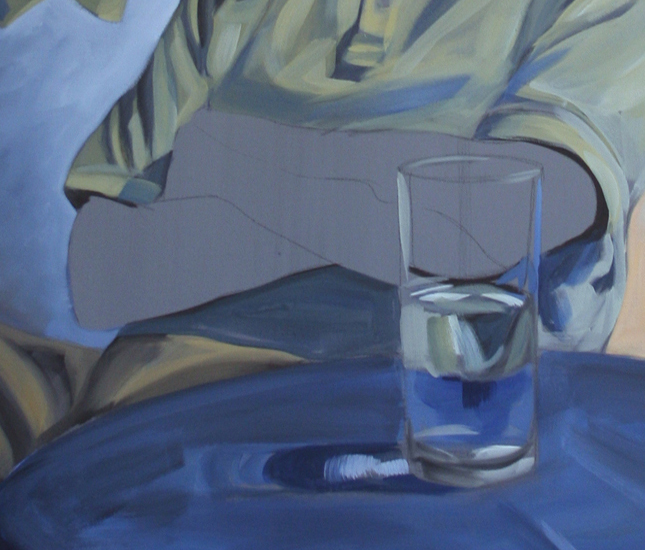
Edgar,11"x14" oil and mixed
media on masonite

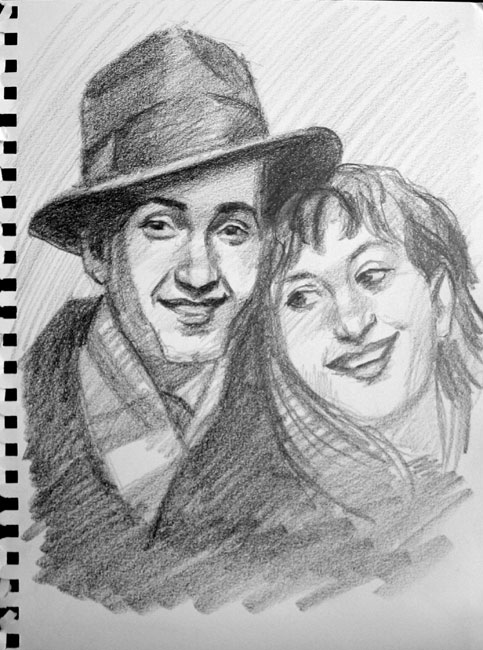
Edgar, 12"x9"
graphite on paper

Click on images to enlarge.

The story you write should be a "Flash Fiction" which is a complete story in one thousand or fewer words.  Please post the story in the comment section, you will have to provide your name and an email address in order to be qualified to win or you can e-mail me at kmencher@ohlone.edu with your info.

The contest closes Monday November 1, 2010.

There is a problem with how many characters can post (only about 4,000) so if you cannot post it.  E-mail it to me at kmencher@ohlone.edu

Go to my website for more contests: http://www.kenney-mencher.com/

Winning flash fiction stories will be integrated in with an exhibit in San Francisco at ArtHaus Gallery (April 8th for the reception). 

The show is called: Renovated Reputations: Paintings and Fiction inspired by Vintage Portrait Photographs

The exhibit will include a series of 20-40 paintings and mixed media works ranging in size from 8”x10” to 18”x24” framed with thrift store and vintage frames.  In addition to the exhibited works ArtHaus is publishing catalogs signed by me and as many of the authors as possible.  Catalogs/books will consist of image of the painting with the text of the “flash story” surrounding the image.  If I can get the authors to come to a book signing/party, authors would sign their pages for some of the printed stuff.

We're going to have a photobooth for the show for participants to play with and vintage costumes. 

Of course I'll send the authors free copies of the catalogs.

I will announce the winners the day after the closing deadline for the competition. I'm planning on doing one flash fiction competition a week every Monday from now until April.  You can preview the works I have so far completed here:
http://www.kenney-mencher.com/catalog/recent_work.htm

________________________________________________________________________
This one was e-mailed to me:
EDGAR DOILY AT THE POINT by Dee Turbon

Edgar Doily, hair all shocked and his ears like the spread wings of birds, and a smile as bright as old man Hoyle’s picket fence and just as crooked. And his pa said he was to come straight home, soon as school finished, and he had chores to do and his homework, too. And no man ever made a success of his life without he had to put in the effort, that’s what his pa says. Only Edgar Doily didn’t go straight home. Up to the point he went with Tommy and Shoo and Grits.

Throwing stones, throwing them at the sky, high as birds or clouds, and then those stones falling, fast as bullets, and entering the water making a sound like duck-farts, and that’s what the boys call ‘em, and the boys laughing fit to burst at that.

And Tiff’s there’ too, and the boys all think she’s the prettiest girl in school, so they throw their stones a little harder, even though their arms ache, and they laugh a little louder and all for the catching of Tiff’s attention. And she knows. Handstands then, and cartwheels turning, and Tiff joins in, tucks her skirts into her knickers and shows the boys a longer leg, and their whole world is turned upside down and time is too quickly spent, their time, and the church clock tells them it is late.

‘You have the bluest eyes I ever saw, Edgar Doily, and I choose you to walk me home.’

And he is dizzy and his heart skips and he might be turning cartwheels still. And the prettiest girl in school takes his hand in hers and they walk the slow way to where she lives, and what they talk about he afterwards can’t recall, but he talks without halt until they stand at her door. And she turns to him and tip-toe tall she leans into Edgar Doily and kisses him, the kitten-pink tip of her tongue in his mouth and kitten-soft, too. And she says he kisses real nice and she hopes he’ll walk her home again one day.

And ‘what you got to smile at Edgar Doily?’ says old man Hoyle leaning on his picket fence gate, a pipe between his teeth and his old cur curled at his feet. ‘Cos your pa’s looking for you and he ain’t smiling, no sir, he ain’t.’

And Edgar notices then the dark at his back and the sun gone from the sky, and he quickens his step, skipping it looks like, and he stumbles some, but the smile does not slip, and Edgar Doily holds tight to the memory of Tiff’s kitten-kiss. All the way home and his pa waiting there, looking at the clock on the mantelpiece and counting off the minutes, and they are many.

Edgar Doily in his front room, suffers the lecture then, head bowed and his hands behind his back. And he listens to his pa tell him, over and over, what it takes to be something in this world and how a man will be measured when he is grown and what responsibility is. And Edgar wonders then if his pa was ever kissed by a girl on tip-toes and the point of a girl’s tongue in his pa’s mouth, and if he had how he could forget the moment and everything he is or was shrunk to that porch-light touching of a girl’s lips to his, and Edgar Doily does not know what more there can be in the world, sits on top of that world he thinks, with his head in the clouds.


_____________________________________________________
This one was e-mailed to me:


Edgar by Mark Brosamer

Lots of the kids in our cul de sac had fathers who had gone off to the war, so my case wasn’t really that special. Still, my mother bore it hard, and maybe even harder because I was an only child. Sometimes I would see her crying as she smoked out on the porch or standing over a sink of dirty plates. Usually I was running out into the street and I will admit to you that her sobbing embarrassed me enough that I did not stop to comfort her. I pretended I didn’t see her tears, and she would do the same, yelling after me through a cracked voice something like “Edgar, I want you home when the streetlights come on!”
Mostly the kids on the street spent our days outside, playing war or imagining ourselves on some great western adventure, and this was especially true that breezy summer when our fathers had been shipped overseas. In our play, we fought their enemies in our own backyards, in the fields and culverts that peppered our little suburb.  We turned anything longer than our arms into rifles, anything shorter into hand grenades and sticks of dynamite.
               I didn’t think about my father dying, to tell you the truth. I somehow knew that he would come back when school started, as if the war could not possibly last through Labor Day, when I’d need him to help me with math or get ready for the October Pinewood Derby.
               I remember the strong, warm wind coursing through our town that summer, how it irritated our eyes and kept us down at the creek, our pantlegs rolled halfway up our scrawny thighs. I remember the incident with Mr. Jenkins, too, who lived two doors down from my house. As one of the few men left on the block, he had come to help us when there was a toilet leaking or a lawn that had grown too long for a boy to mow. I don’t know why he wasn’t sent off, although Pete had overheard his mother whispering something about a bad liver or maybe it was flat feet. We weren’t that concerned. In fact we were glad to have him home that summer, because we had been eager spectators of his own private war, the one he’d been waging since spring against the gopher in his front yard.
Arnie’s cousin had seen him at McWhorters buying traps, and then we all saw him dropping poison down the holes that had turned his lawn into a miniature minefield of craters and the excavated piles of dirt next to them. He dug; he swore; he’d shake his head and scowl every time he passed his front lawn on his way inside.
               It must have been late August when his patience wore out. Most of us kids were sitting on the curb in front of Carl Finkelstein’s house when Mr. Jenkins called us over to his yard.
“Hey boys, y’all come over here for a minute,” he said, gathering us towards him with a broad sweep of his thick arm.  He was holding a white painter’s bucket full of hammers, eight or nine of them.
“Listen men, I have a little mission I need you to help me with, something I can’t do by myself, okay?” He set the bucket in the middle of his tortured lawn and rubbed his hands together slowly.
“I want each of you to take a hammer and kneel yourself down in front of a hole, you hear me now?” He reached into the bucket and pulled out a hammer, handing it to Nick Campolo, the oldest kid on our street at twelve years old.
“That’s it, come on over boys.”
Out of curiosity, I had crept over to see with my own eyes the bucket full of hammers, but I did not come any further until Mr. Jenkins called me by name.
“Edgar,” he said, drawing out the ‘e’ in my name a little too far, “you’re a tough little cowboy, ain’tcha?” He held the wooden end of a hammer out to me, and I could feel the eyes of the other kids on me as I reached out for it. I raised my arm as slowly as I could, wondering if I could stretch it out slowly enough for him to think I was an imbecile or just uncoordinated. Maybe he would lose interest in me and pass my hammer into one of the clutching hands of the other kids.
Mr. Jenkins waited as long as he needed to, then dropped the hammer into my small hand. It pulled at my arm as if it had already hijacked my tendons and muscles for its own purpose. I wanted to run home, but knew that I would never hear the end of it from the other kids, especially Nick, who had positioned himself at the biggest hole and was staring menacingly down into its black mouth.
               I sunk down beside one of the last remaining holes, trying to choose one that looked abandoned, although really they all seemed pretty fresh to me.
               Satisfied with our positions, Mr. Jenkins the garden hose from its rack near the faucet at the front of the house, stretching it to the last remaining gopher hole in his lawn.
“Now boys, listen to me carefully. There’s a war on, as you know, and we all need to help each other out, right? Like them times I lent a hand to your mamas ‘round the house. Well here’s your chance to lend me a hand. I’m about to turn this hose down into that gopher den, and in a minute you might see him pop up out of your hole, and if you do I want you to bring your hammer down on his dirty little head, okay?”
I looked around at the other boys, hammers suspended over their heads in anticipation, all staring into their holes. I counted them, trying to calculate the odds of the gopher coming up my hole, but the arithmetic eluded me. I did not know anything about the underground science of gophers, or whether he might have some contingency plan saved for just such an ambush as this. I secretly hoped they were more clever than we gave them credit for, like the cartoon coyote that seemed forever to escape, scarred, burnt, flattened, and pock-marked, but always intact.  
My mind reeled, striving for escape, and meanwhile Mr. Jenkins had turned on the hose, jabbing its end into the hole at his feet.
               I stared as far as I could into the black hole between my knees, my eyes blurring in the hot afternoon wind. I imagined that I could see through the end of that miniature tunnel, beyond it and into whatever jungle or trench or desert my father was protecting for America. I saw him back in our living room, sitting in his plush recliner and smiling as he pulled at a cigar. I saw my mother, too, calling my name into the evening because I’d been out too long and gone too far. I heard the water gurgling through the tunnels, its pitch rising as it rushed at the light, sweeping its prey towards our little troop of boy soldiers. I tried not to blink but my eyes burned. I stared and stared down that hole, the shriek of the water ringing now in my ears, chanting softly to myself, “Don’t let it be me. Don’t let it be me.”


Saturday

Speaking of Painting Glasses of Water: Variations on a Theme


A couple of days ago I posted an article on how to paint a glass of water.  In keeping with that theme I thought it might be cool to discuss how I come up with a theme for a body of work.

To Half and Half Not,  oil/canvas 36"x48"

Painting is one of those art forms, like writing a song, or a book, in which a central theme can unify and interest both you and the viewer.  I think that if you pick a motif or symbol that you find fascinates you, your paintings will be sincere and perhaps satisfying pictures that can excite the artist to get into the studio and begin working.

My paintings start with a concept and most recently, I’ve found that sometimes working with a single theme and exploring variations on it, I’ve been able to come up with a series of cohesive paintings that are interesting for the viewer and for me to make.  I’ve always been attracted to the works of some older Netherlandish masters such as Brueghel and Bosch who worked with allegories, proverbs, and parables.  This lead me to explore the idea of working with similar ideas, most notably the cliché of the “half glass of water.”

Decision, oil on canvas, 36"x48"

I started my exploration of the theme of “Is it half full or half empty?” with a photo shoot of my friend Jim and my wife Valerie.  Since my work is slightly fussy realism and I can’t really afford to have models sit for the forty to fifty hours it takes for me to make a painting I work from digital photographic reference.  I actually take somewhere between two to ten images and work from manipulated and blown up photographs and use these in place of close up details etc.  You can read about how I use photographs here.

Velasquez, Water Carrier 1619


I got my ideas for the pose initially from two paintings by two Baroque masters Caravaggio and Velasquez.  “Boy Being Bitten by a Lizard and The Water Carrier of Seville have long been two of my favorite paintings because of the heightened sense of chiaroscuro (dramatic light and shadow) and also because both of these artists included a clear glass of water in their paintings.  What I found so great about this theme is that it embraced all of my strengths and none of my weaknesses.  It also was a bit of a challenge for me to paint a clear glass of water.  My first painting of this theme was an image called “Decisions.”

Caravaggio, Boy Being Bitten by a Lizard, c1600

For the pose in “Decisions”, I asked Jim to think about different points of view or emotions about the glass of water and I moved him around the table.  I was able to take several of these images and put them together in a cohesive image.

Two Landscapes, 36"x48"
 
I asked my wife, Valerie, to do the same thing and she was actually even a bit more dramatic.  In the final piece, I thought about the fact that I wanted to comment on her two poses and so I added an additional element to my paintings of her, some paintings in the background.  In “Two Landscapes,” I wanted the landscapes moods in the background to reflect something of the feelings I thought she was communicating in her poses.  I liked the motif of extra images included in the paintings to communicate additional feelings or ideas in the images and I built on this in additional paintings.

In “The Middle Way,” I actually set up a slide projector with a blue slide aimed at the left side of my model Heidi.  In the photos I took, I found that the blue was too intense and so in mixing the colors I toned down the cool blue on the left side of her flesh tones but still included quite a bit of it in the drapery.

The Middle Way, oil on canvas, 36"x48"

Raphael’s painting is an allegorical representation of two basic but opposing philosophical schools of thought.  The two central figures are the keys to unlocking his allegory.  The figure on the left represents Plato, who points heavenward as a symbol of searching for the “ideal” or “platonic” world that is the world of ideas rather than the physical one.  The figure on the right, who gestures downward, is Aristotle who’s philosophy lead him to explore and document the physical world through logic.  I’m no Raphael but I’m trying to learn from him.

Raphael, School of Athens, 1509
 Taking a page from much better artists than myself I decided to try out some allegorical themes and so my “half glass” paintings deals with points of view.  


 “Radio Flyer” explores the world of a ten year old boy. 


“Polly Anna” is meant to reference the clichés dealing with the 1950’s housewife. (This painting was used on the cover of a book by Hannah Gerber "How to Grow Up."

One of my most recent painting using the “half glass of water” theme is called “Two Schools.”  In “Two Schools” my aim was to incorporate some of the things I had learned about color and integrate it in with some art historical ideas and symbols used in Raphael’s famous painting “The School of Athens.” 

Two Schools, 36"x48" oil on canvas
 
I hope this helps some of you guys out there!

Here's a couple of links to more of my "How To" articles about painting.

Friday

Edgar, 12"x9" graphite on paper

Pretty soon you'll have a chance to win this preliminary drawing that I made for the painting of the same name see my post of the portrait of Edgar.  I'll be running a series of Flash Fiction Challenges/Contests where if you write a short story (one thousand words or less) based on the portrait.  You get to win the drawing.  I'll also be publishing the images and the stories in a book and some catalogs.  

Stay tuned!


Winning flash fiction stories will be integrated in with an exhibit in San Francisco at ArtHaus Gallery (April 8th for the reception). 

The show is called: Renovated Reputations: Paintings and Fiction inspired by Vintage Portrait Photographs


The exhibit will include a series of 20-40 paintings and mixed media works ranging in size from 8”x10” to 18”x24” framed with thrift store and vintage frames.  In addition to the exhibited works ArtHaus is publishing catalogs signed by me and as many of the authors as possible.  Catalogs/books will consist of image of the painting with the text of the “flash story” surrounding the image.  If I can get the authors to come to a book signing/party, authors would sign their pages for some of the printed stuff.

We're going to have a photobooth for the show for participants to play with and vintage costumes. 

Of course I'll send the authors free copies of the catalogs.


I will announce the winners the day after the closing deadline for the competition. I'm planning on doing one flash fiction competition a week every Monday from now until April.  You can preview the works I have so far completed here:
http://www.kenney-mencher.com/catalog/recent_work.htm
 

Monday

Win a Drawing: Flash Fiction Writing Contest

This contest is closed.  
Please visit my website for an index of more competitions!
http://www.kenney-mencher.com/
 
It was a tie between Brian Newlin and Angela Readman.
Both will receive drawings.
 
Also, I'm going to have to make a painting of Chastity because Michael Gray's story was so good, so I'm sending him a drawing as well.

I LOVED ALL THE STORIES
 
Thank you all so much for participating.

Win this drawing of Chastity Beldt, graphite on paper 12"x9"


by writing a story about the Aviator, oil on canvas 30"x20"


The story you write should be a "Flash Fiction" which is a complete story in one thousand or fewer words.  Please post the story in the comment section, you will have to provide your name and an email address in order to be qualified to win or you can e-mail me at kmencher@ohlone.edu with your info.


The contest closes Monday October 25th 2010.


There is a problem with how many characters can post (only about 4,000) so if you cannot post it.  E-mail it to me at kmencher@ohlone.edu


More competitions are available on my website: http://www.kenney-mencher.com/


Here are some of the stories about "The Aviator" that were sent to me by e-mail.


_________________________________________________________________________
The Aviator by Brian Newlin

John had always loved the sky. The stillness. The wind. The sense of peace and clarity that it gave him. He had been born in the close, smoke-filled narrows of the South Bronx, with the black ribs of the Harlem Line obscuring the grey sky outside the apartment windows. It wasn't until his father had died, choking and rattling with soot filled rage in his lungs, that his mother packed him up for the wide open spaces of Iowa. Standing in the cornfield of his uncle's farm, John stared out into the endless crystal blue horizon for the first time in his life and with the sound of a thousand cornstalks rasping in his ears, he swore someday he would fly.

Years later, right after Pearl Harbor, John enlisted in the Navy. He waved goodbye to his mother at the bus station, never imagining this would be the last time he would see her. "Why the Navy?", she had asked. "You've never been in anything but that old rowboat." But it wasn't the ocean that John was looking for. It was the sky, and the Navy had announced a program that had gripped his heart like a fist. He had read about the airships, even seen one once on a newsreel at the movie theater, but could barely believe that he was finally here. The doors slowly rumbled open and John saw the blimp, it's logic defying mass swaying in the breeze like a cloud made solid. He found himself laughing, wondering what his mother would say back on the farm in Ohio. Ohio? No, it was Iowa.

Floating high over the foothills, John could barely keep focused on the controls in front of him, his eyes constantly locking on the openness of the skies around him. Every gust of wind caused the blimp to rock and sway, and there was a constant low hum of the engines that filled the cabin, almost like the sound of a strong wind through the corn. Or was it more like the rumble of the train past his bed when he was a child? It seemed so long ago. It took all his willpower to guide the airship back to base and land, he wanted so much to fly forever.

He saw her for the very first time at the beach. He and some of the guys had driven out to the shore on their day off. As they spread out blankets, John spotted her standing by the water, wearing a bright blue swimsuit and her sunshine yellow hair tied up with a red kerchief. For the first time in a long time, John found his eyes fixed on the girl in front of him and not up into the clouds. Feeling that powerful grip on his heart once again, he mustered up the courage to talk to her. Her name was Kate, and they walked and talked for hours. He had never seen hair so.... red? Brown? No, blond.

How could he ever forget that blond hair?

The first mission was over the coastline of Peru, scouting for enemy subs. John fluctuated between joy and terror as the airship floated lazily over the waters. He tried to keep his mind on the task at hand, but it kept drifting back to K--- and her blond hair. Kate. They never did find a sub, but John had used the long hours to make up his mind to marry her. The wedding day was like a dream, ----'s hair done up in a bun, her white dress like a cloud against the bright blue sky. His parents had even come out for the wedding. Hadn't they? John couldn't remember.

The following years were filled with joy. There was a house. It was yellow. Or white? His wife, he loved her so much. They had a son, and they named him after his uncle -----, who had a farm... somewhere. There was corn, he thought. Yellow. He remembered yellow. He wished he could remember her face. She was so pretty, even until she had passed away that morning. She wouldn't wake up. Sad. So sad. But there was always the sky.

"How is he today?", Peter asked the nurse. His father looked so tiny and frail, sitting in that wheelchair out on the lawn. "He's had better days. I couldn't get him to eat his breakfast but we'll try again later.", she replied, tucking the blanket around his legs. Peter hated what the disease had done to his father, thinking that the man had deserved better than this. It was as if his memories had floated away like balloons.

John's watery eyes stared out into the endless crystal blue horizon and he hoped his wife would be home soon. The rasping of the wind in the trees sounded so familiar, but he couldn't remember what it was.

---- had always loved the sky.


________________________________________________________________________________
Bright White by Angela Readman

  My Ma spoke only in questions. ‘Would you like a some eggs?’ ‘Another blanket?’ I shook my head. ‘I know, some soup,’ she said. Soup was her favourite. One with little noodle letters of the alphabet in it. I used to slurp the liquid off the spoon and spend time inspecting the letters scattered in the bowl. One day I thought I might find my name. There were never any I’s. Lots of Z’s, Y’s. She brought the soup one day beaming, ‘Would you like some more bread?’ I shook my head. I took a sip of soup and never noticed the letters, the ones that had taken her weeks to find. Dozens of cans of soup opened and sifted through to dry out the letters so one day I’d find my own name like a sign.
  She took the bowl away sadly, ‘Would you like to me save this for later?’ I said I didn’t think so. I’d been sick as long as I could remember. There’d been doctors, and hospitals and whispers about money between my parents I wasn’t supposed to hear.
  My father’s approach was different. He still bought me bats and balls. I didn’t touch them. I knew I’d never play again. And still my father persisted, sitting by my bed. He brought me old photographs and made me see them again.
  ‘That’s when we you helped me birth the breech calf, remember?’ he handed me the photo of a boy I hardly resembled stood at the back of a cow with bloody hands and a piece of rope. In the background behind me was a bright white smear.
  ‘What’s that?’ he said. I looked closely. It looked like wings.
I looked at the next photo and it was there again, a ghostly hand near my shoulder in the photo of the baseball team. The shape was on most of the photographs. I’d never seen it before, but then, I’d never had time to look so closely at photos before. They were my parents’ thing, a big deal. They didn’t own their own camera. Photos were rare, taken only when my uncle came to stay from the city, the guardian of my family’s memories.
  ‘That’s your guardian angel,’ my father said, pointing to the white smudge on the photo, ‘watching over, everywhere you go.’
  I closed my eyes and dreamt of bright white, something I couldn’t make out like a lamp on in fog. Sometimes I thought I saw something I couldn’t make out, like sun through a sprinkler, the shape of someone refracted into small beads like rain.

  No one could explain how I got better. But I did. I grew, the illness behind me, always sitting on the bench. I lived twice as hard, ran from it, paces behind me. I’m invincible I thought. I got my angel. I always won when me and my buddies played chicken. I climbed highest and thought of bright white spreading out to catch me if I fell. I felt it behind me, arms spread round my shoulders handing me to safety. When war broke I signed up while my buddies waited to be called. I never waited for nothing. I was excited. They were gonna teach me about planes. I was reading all about flying.
  ‘Zeppelins, the closest cows ever get to heaven Pa,’ I said. I told about their intestines, the gasbags in the zeppelins. My father snorted.
  ‘Dumb fool thing to do, sign up to get killed,’ he said. He was a simple farmer who had no time for heroes. Not even the mention of cows won him round.
  ‘I got my angel,’ I smiled.
My Pa got up from his chair and walked to the bible. From behind it on the shelf he pulled out glass my uncle’s glass plates. He showed me sheets of glass, the double exposure my uncle made on those old photo’s. It was how they made an angel. It was their trick to hope. I was angry, no white hands to cool cheeks, no feathers breathing lullabies in my ear.
My father shrugged and lit his pipe.
  ‘You love someone son, you lie when you gotta,’ he said, ‘You’ll learnt that.’
Son of a bitch. He could have waited.
  The day I left, I shaved slowly, no damn angel behind me in the mirror as the steel moved over my throat. My Ma went on tip toes to kiss me at the door and tucked a prayer in the top pocket of my jacket.
  ‘Take care,’ she said. She was wiping her eyes, hoping when her tears were gone only pride would be on her face, not fear. ‘My boy’ll be alright, you feel your angel behind you don’t you?’ she asked.
  ‘Sure,’ I said, ‘Ma, sure, always.’
Then I pecked her cheek. I looked up at the big blue sky and for the first time I walked out under it, alone.

__________________________________________________________________________________
THIS BIRD HAS FLOWN Dee Turbon

Warwick walked with a limp and he walked crooked, lifting his feet in short quick movements, as though he was stepping barefoot through fire. His back was bent, the weight of something on his shoulders, and his eyes kept looking up at the sky.

He watched the clouds and calculated wind speeds from their passing, and he held one wet finger up to test the air and the direction it moved in. Then he made a short penciled observation in a black moleskin notebook, nodded to himself and hirpled across the runway to a waiting plane.

It was a Piper Cub. Just over twenty feet long and with a top speed of 65 knots. He’d called it Angel and on one side of the plane was painted a blond-haired actress with swan’s wings at her back. Her name was Grace, the actress, and she’d been something in secret to him for more than twenty years. In the painting on the side of the plane, she showed rather too much cleavage for her to be a real angel and too much leg, but Warwick held his hand to hers, palm to palm, and he muttered a short prayer and he crossed himself before clambering into the cockpit.

He checked the fuel gauge, tapped at the glass so that the needle shifted and found its true reading. He flicked switches and turned dials. Then he strapped himself in and pulled the small window shut.

Tom was out front, slow and lead-footed, hands like shovels and an easy smile. He was tall and good looking, chiselled features and a shock of black hair that fell across his eyes. One for the ladies, Warwick thought. Tom grinned at Warwick and gestured with his hands, indicating that everything was good for take off. He seemed excited as the young can be. Warwick raised one slow thumb in the air to confirm that he was also ready.

The propellor turned and the single engine coughed and spat and the plane shook and the air screamed so loudly that Warwick could scarcely hear his own thoughts. Tom waved and nodded, everything a pantomime gesture writ large so that Warwick would not miss what he was saying.

The very air shuddered as the plane swung to the left and began to move towards the tarmac of the runway. A voice from the tower sounded in Warwick’s head, directing Warwick to the third lane, recording the time and making a rude joke about the painted actress and her painted ‘heavenly tits’, a joke Warwick had heard before.

The plane rumbled down the marked strip and picked up speed. Warwick checked his instruments and looked to the sky again. Then he closed his eyes and held his breath, his hands moving automatically through the flight sequence. This was the moment, almost the moment, when he felt suddenly light and a little giddy. The wheels left the ground and he was quickly airborne and the tower below him, shrinking to something as small as a child’s toy and smaller, though the crackle in his earphones was as loud as before.

Above the clouds he felt different, usually he did. His shoulders straightened, as though a weight had been removed, as though the cares of the world, his world, slipped from him. And the pain in his leg left him. That was usual. But it was different today. 

Warwick thought of Grace painted on the side of his plane. A black and white picture of her was stuck next to the altimeter and Warwick talked to her as though she was really there, a one-sided conversation that made no sense to the boys in the tower. 

‘Mad as a hatter,’ rasped the voice in his ears.

Warwick remembered something he’d read, something Sagan had said, about madness and love, and madness being the only sensible way to love. It felt right, like a truth new-discovered.

Warwick unfolded a map and he marked out a new course, not one he’d agreed with the men on the ground. He altered direction, the wings of the plane tipping and the sound of the engine rising in pitch till he levelled out again. 

The tower alerted him to the change and gave instructions to Warwick, adjustments he should make to be back on course. But Warwick pretended not to hear. He squinted against the sun and increased his speed, as much as a Piper Cub could. The voice in his ears fizzed and spat, more urgent with its instructions.

‘Grace,’ said Warwick. Just her name. Then he sipped brandy from a silver hip flask and he picked up the picture from the instrument panel. ‘The only sensible way to love,’ he said, and his voice was broken and something else broken, too.

‘Tower to Angel, course correction necessary. You’re way off line. For Heaven’s sake, Warwick.’

The sun was a bright whiteness in front of him, so bright that he could not see the instrument panel, could not see the picture of Grace in her swan wings. ‘This bird has flown,’ he whispered, and it also felt right, like the point of madness to one in love, like he was flying into heaven, which was not far from the truth.


Winning flash fiction stories will be integrated in with an exhibit in San Francisco at ArtHaus Gallery (April 8th for the reception). 

The show is called: Renovated Reputations: Paintings and Fiction inspired by Vintage Portrait Photographs


The exhibit will include a series of 20-40 paintings and mixed media works ranging in size from 8”x10” to 18”x24” framed with thrift store and vintage frames.  In addition to the exhibited works ArtHaus is publishing catalogs signed by me and as many of the authors as possible.  Catalogs/books will consist of image of the painting with the text of the “flash story” surrounding the image.  If I can get the authors to come to a book signing/party, authors would sign their pages for some of the printed stuff.

We're going to have a photobooth for the show for participants to play with and vintage costumes. 

Of course I'll send the authors free copies of the catalogs.


I will announce the winners the day after the closing deadline for the competition. I'm planning on doing one flash fiction competition a week every Monday from now until April.  You can preview the works I have so far completed here:
http://www.kenney-mencher.com/catalog/recent_work.htm


How to paint a glass of water.


Painting the Glass and How to think about it.
Buoy oil on canvas 36"x48"

The most important thing in painting a clear vessel of water is to detach yourself from the idea that it is a cylinder with distinct outlines around it.  Because the outlines of the glass dissolve and merge into the background and the curve of the glass and the water in it distort and change what is seen through it, visually what you are really seeing is a series of interlocking colored shapes and tones that often do not correspond to the outlines of the glass cylinder.
I began by first painting a neutral gray tone for the background with a mixture of black and white gesso.  On top of this neutral gray I did the under drawing in 2B charcoal pencil.  Usually I use a T square to create a vertical axis for any cylindrical object. In this case, however, I indicated the midline of the water glass and the ellipses by eyeballing them and then double-checked the ellipses with an ellipse guide. The rest of the details in the drawing are guides to show where the light and color breaks occur on the glass.  I think of the glass of water as a series of abstract shapes that are filled with value and color.  

In this painting, my underpainting of acrylic corresponds closely to the colors of the painting I will be putting on top of it.  The glass of water is the focus of the painting and sits in the foreground, so I painted everything else behind it in acrylic paint first. Water refracts and reflects the objects and colors around it, so as I painted the tablecloth I used some of the same colors in the glass of water.  I also observed and painted the light passing through the glass of water and the forms of light and shadow it created on the tablecloth.


Still working in acrylic, I rendered the shirt visible through the water glass.  The glass and the water in it did not change the colors or value as they passed through; rather, the water and the curve of the glass magnify, shrink, and in general distort the shapes of the shadows and colors that pass through it.
Having completed the acrylic underpainting, I began painting in oil.  I worked from background to foreground again, and since this painting took multiple days, I saved the colors that I mixed for the walls, tablecloth, shirt and flesh tones in plastic wrap to reuse later.  I planned to use some of the leftover paint in the highlights and reflections on the surface of the glass.  After painting the wall behind the figures and the heads and arms, I began work on the tablecloth, shirt, and glass. Then I painted some of the abstract forms the shirt made in the glass itself. 
 

Having rendered the tablecloth after the shirts and pants, I incorporated some of the tablecloth colors into the glass.  After rendering the arms of the figures, I let these dry overnight.  Again, I preserved all the colors I had mixed in plastic wrap.  The next day I returned to the glass.  Now that the paint was mostly dry or tacky I was able to scumble some of the highlights along the rim and the surface of the glass.  I also repainted some areas wet into wet especially the reflections of the flesh tones on the bottom of the glass and in the water itself.
 
    Buy this painting on Etsy for $700
    More "How to" Articles and Tutorials
    I have a solo show until June 25th 2011
    Renovated Reputations and Manufactured Memoirs
    is a solo show at ArtHaus gallery and an illustrated anthology of short stories in which Griffin and Sabine collide with neo-noir fiction.

    ArtHaus 411 Brannan Street  San Francisco, CA 94107
    415-977-0223 

    www.arthaus-sf.com

    Show runs through June 25th 2011 


    Trudy Ages 12"x9". graphite on paper

    Saturday

    Tuesday

    I'm the cover artist for this book!


    I'm the cover artist for this book!
    John Woods is reading from my book of noir crime stories, Bad Juju & Other Tales of Madness and Mayhem at the Cornelia Street Café in NYC on Tuesday, Oct. 19 from 6-7:30 a.m. My co-reader is New York writer Jim Story.


    Since its publication in April 2010, Bad Juju has had an amazing run. The editors of New Y...ork Magazine rated Bad Juju as highbrow brilliant in their cultural Approval Matrix for April 26, 2010, calling Bad Juju: “Hallucinatory, hilarious, imaginative noir.” Ben Fountain, 2007 PEN/Hemingway Award-winner, said: “Bad Juju is the product of a truly twisted mind, and I mean that in the nicest way,” while Scott Phillips, author of The Ice Harvest, called Bad Juju “. . . the wildest, funniest, scariest collection of stories I’ve read in a long while.” And Ron Rash, PEN/Faulkner Award-finalist and winner of the Frank O’Conner short story Award bleeped: “[Bad Juju is] not for the faint-hearted.”

    Publishers Weekly wrote: “Violence, sex, and gonzo plot twists fuel Woods' diverting collection of 19 stories, most set in sun-and-blood-drenched borderlands. [The stories in Bad Juju] amp up the volume to 11...” Spinetingler Magazine dubbed me “the David Lynch of short crime fiction.” Ken Bruen, master of Celtic noir, quipped: “Woods has arrived fully fledged as a maestro…The writing [in Bad Juju] is of such a high caliber that I found myself reading the stories aloud to get the full flavour of Woods’ artistry.” Jay Parini described the stories in Bad Juju as “dark, often strange, [and] eerily radiant.” “Surreal, bloody, profane and often outrageously funny,” concluded the Howard County Times.

    Prior to my New York visit I’ll have the honor of appearing at the 2010 Texas Book Festival with Mark Haskell Smith and Lou Berney.

    I hope you can drop by the Cornelia Street Café on Tuesday, Oct. 19 to have a drink and listen to a couple of writers doing their thing.
    See More

    Tuesday, October 19, 2010 at 6:00pm
    Cornelia St. Cafe , New York, NY